My unresolved payment dispute with FortLab Corp, also known as NimbusNexus cloud services (nimbusnexus.net)
I worked for FortLab Corp, also known as NimbusNexus cloud services, for four months in 2025. The earlier months were paid. For April and May — the last two — the company used the work I delivered, reduced my tracked hours after I had invoiced, then paid nothing at all, and revoked my access without the fourteen days’ written notice the signed contract requires. On the first recording below, vice president Denys Burnis says the transfer for April “will be done today”; it never arrived. Asked later for a legal justification, he answers: “Well, we sort of don’t have one…” Unresolved since May 2025. This page is written for developers considering a contract with the company, and for clients evaluating its services. Based on the recordings and documents below, I would not recommend FortLab Corp or NimbusNexus to anyone, contractors and clients alike. In my opinion, a company that handles a signed contract this way is not one I would trust with money for services either. For additional details, you may contact me at [email protected].
What the recordings and documents show
1. April and May 2025 remain entirely unpaid
FortLab Corp (NimbusNexus) has paid nothing for April or May 2025 — the last two of the four months I worked for the company — although it used the work I delivered. The earlier months were paid without incident. On the first recording below, vice president Denys Burnis says the April transfer “will be done today”, and that the company will “pay what we owe”. Neither happened.
2. Tracked hours were cut after invoicing, with no legal basis given
After I submitted the invoices, the company re-evaluated and reduced my tracked hours. Asked on the record for the legal justification, Denys Burnis answers: “Well, we sort of don’t have one…” Of the disputed hours he says: “So we won’t pay for those hours at all.” Despite repeated requests no written explanation followed, for either the reduction or the refusal to pay April and May — each request was answered verbally, with a promise to consult HR that produced no document.
3. Access was revoked without the contractual fourteen days’ notice
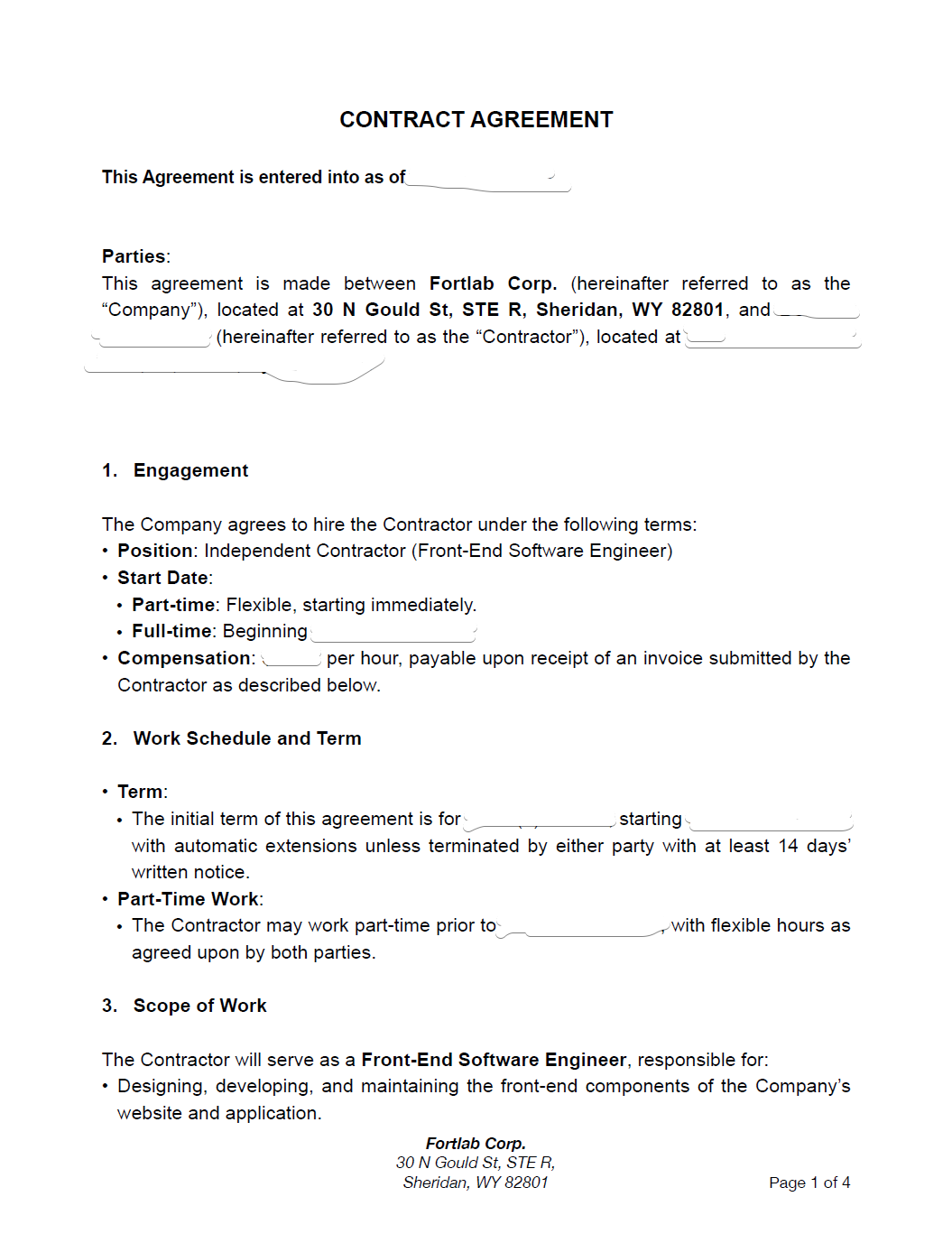
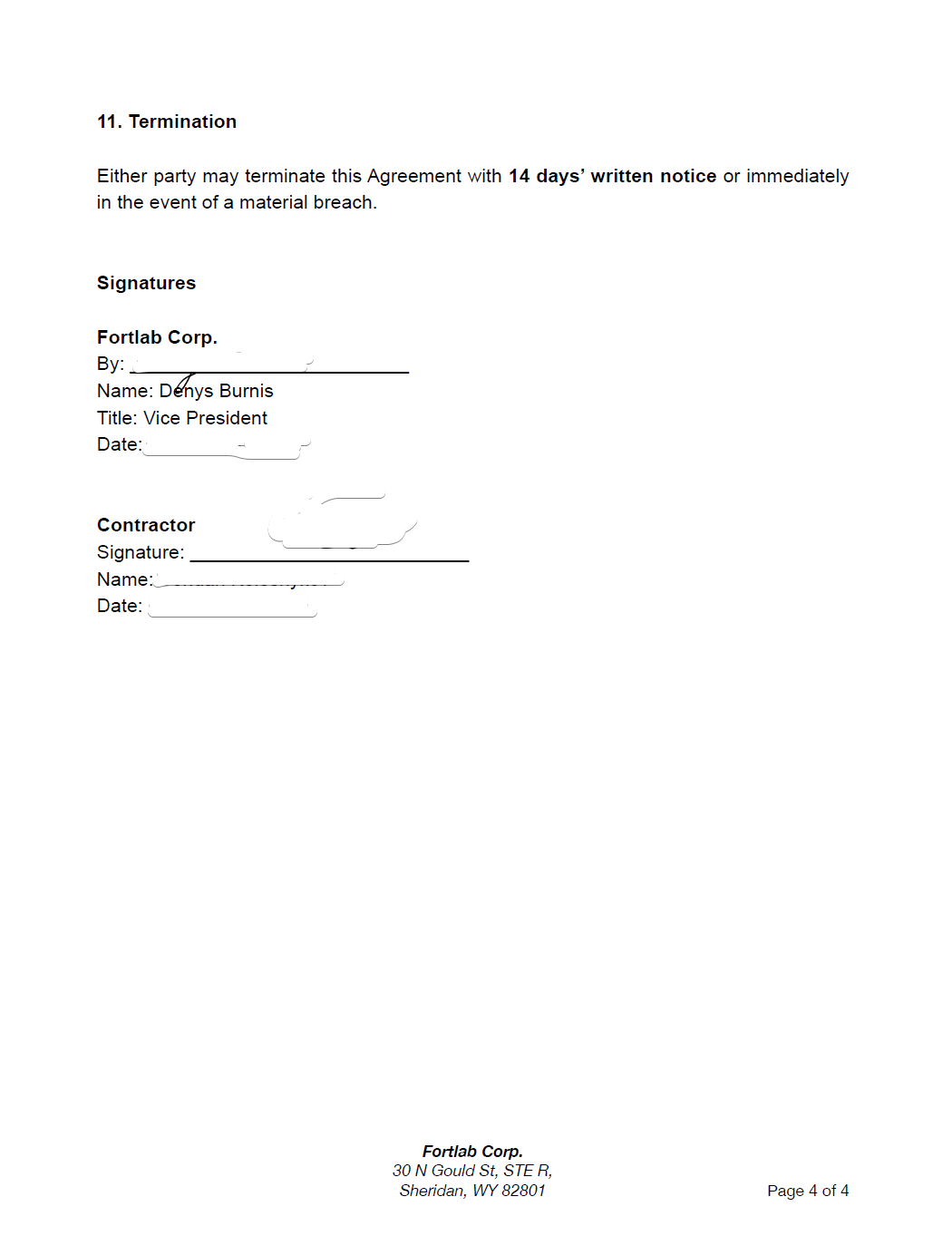
The signed contract requires fourteen days’ written notice before termination. My access was revoked without that notice, and payment for delivered and accepted work was not completed. On the recording the company describes the revocation as standard security practice when cooperation is paused, rather than as a termination.
4. Communication was confined to Telegram, with no company email
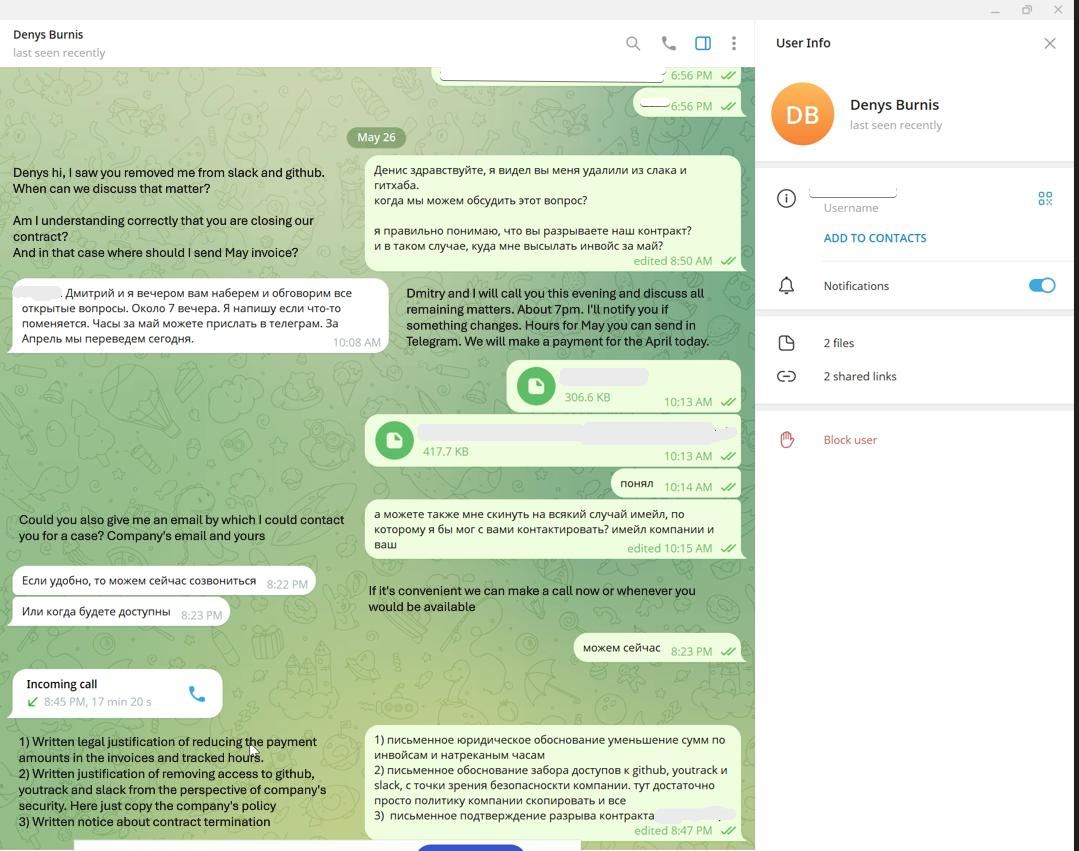
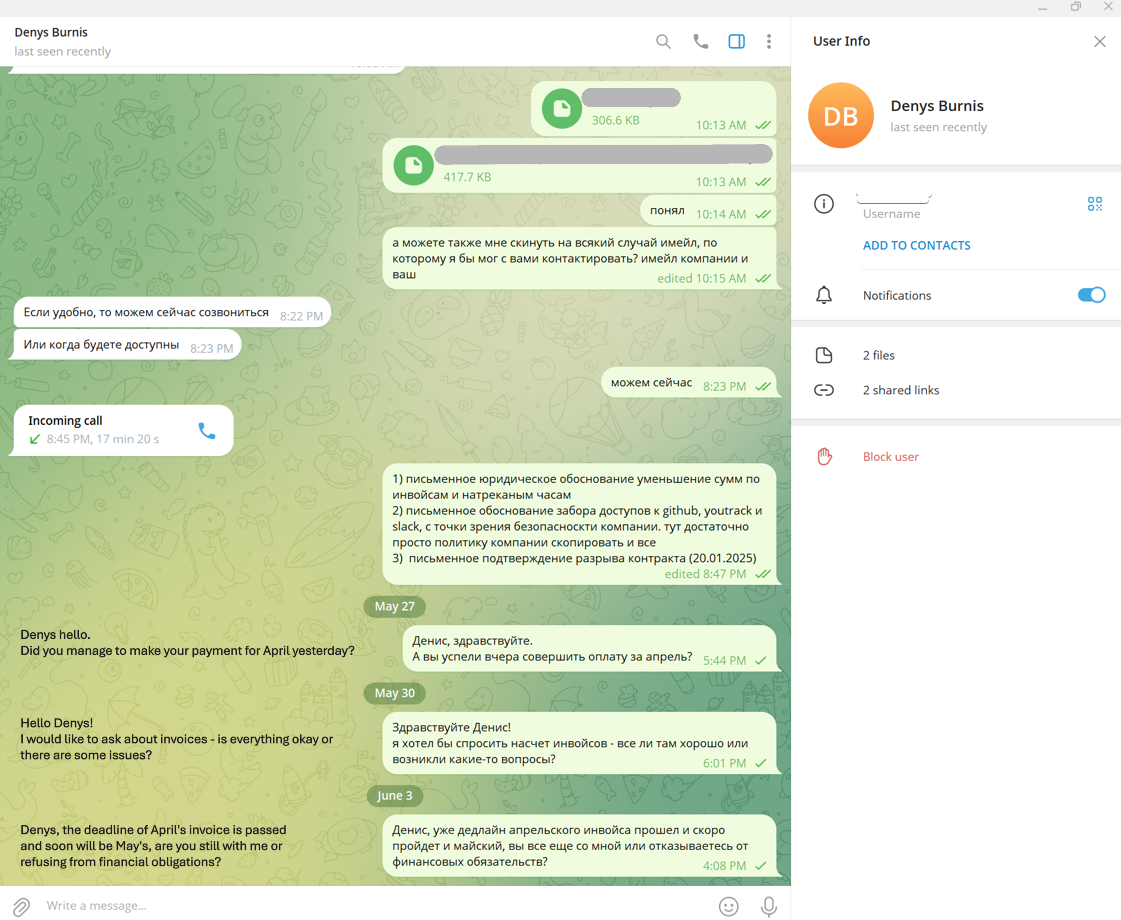
Denys Burnis stated that communication should happen exclusively via Telegram, and did not provide an official company email when I asked for one. That left no independently verifiable record of decisions such as the reduction of tracked hours and the revocation of access.
5. Delivered work is still in use and still unpaid
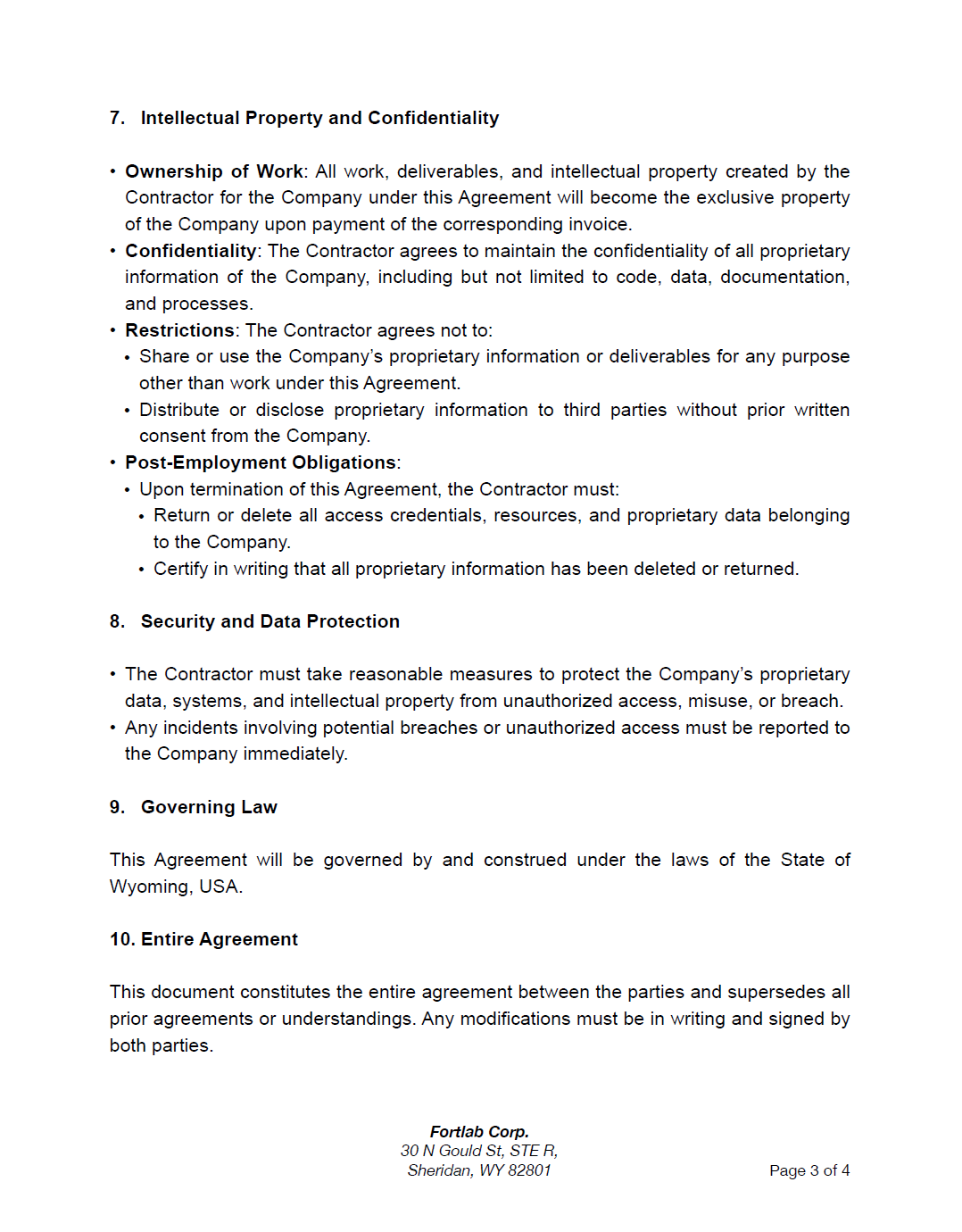
FortLab Corp (NimbusNexus) continues to use code and deliverables from April and May 2025 that it has not paid for at all. On my reading of the contract that leaves the ownership and licence status of the unpaid work unresolved, and in my view it violates my IP rights.
6. No response and no documents since May 2025
All negotiation went directly through vice president Denys Burnis, the most senior person available to me, and after the conversations recorded below he stopped responding altogether — with no one else at FortLab Corp (NimbusNexus) taking the matter over. The documents he undertakes to look into on the recordings — an HR review of the contract provisions, an official letter confirming termination, a written justification for the reduced hours — were never sent. Every commitment made to me was verbal. I have continued to write since; not one message has been answered, and the company has made no contact through any formal channel. In my view it is ignoring the dispute rather than contesting it: at no point has FortLab Corp (NimbusNexus) disputed that the work was delivered, that it is still in use, or that April and May were never paid. It simply stopped replying, and has not followed the notification and payment procedures set out in the signed contract.
How this account is documented
The content supporting the findings above is presented in text, audio, images, and screenshots. You can both read the dialogs between me and the company’s representative (vice president as of May 2025), Denys Burnis, and listen to the recordings. All texts are provided in English and Russian (original) versions.
* To maintain a balance between public transparency and privacy protection, only selected fragments of the conversation are provided. The original recording was created by one of the participants as part of their lawful right to document business communications and to collect evidence of contractual interactions.
* All audio fragments have been processed for de-identification; the voices have been significantly altered and cannot be used for impersonation or biometric identification. The content of the conversation, however, has been preserved accurately and without distortion to ensure the reliability of the accompanying transcriptions.
* The complete unaltered recording is securely stored and may be provided to authorized government or law-enforcement agencies upon official request through appropriate legal procedures.
The contract and the Telegram record
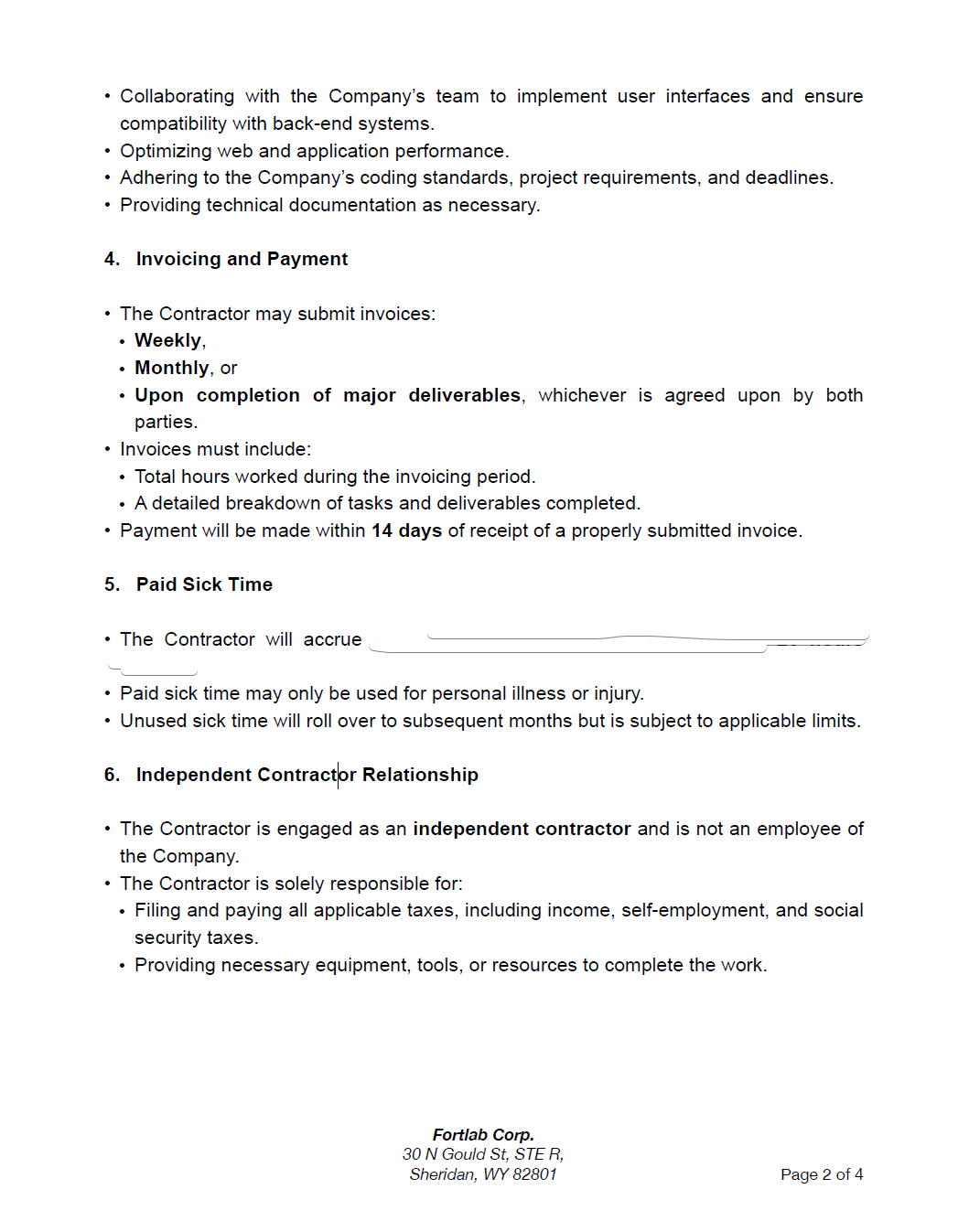
Scans of the signed contract, and screenshots of the Telegram exchange with de-identification applied.
Recorded calls with Denys Burnis
Six excerpts from recorded conversations. Each can be read in English translation or in the Russian original, and played back as de-identified audio.
These conversations took place while the dispute was still open. At that point the company’s stated position was to pay part of the invoiced hours; no payment for April or May followed.
- Denys - I've received your hours. We’ll try to process them soon. As I told you, the transfer for April will be done today, so I think you’ll get it by tomorrow. It’s a day off for us today, so if that affects things it might take longer, but usually you receive it the next day — it’s been fast before. So don’t worry about April. Regarding May, I haven’t had time yet — I saw what you sent but I didn’t have time to review it. You sent it last night when I was going to bed, so I didn’t even get to look. In the next day or two I’ll discuss it with the team, we’ll finalize and close everything. I think there’s no reason to worry — we’ll pay what we owe. I’ll try to process April right now, so don’t worry about that.
- Contractor - Okay, I understand. I have my first question. Why was the contract we signed effectively not even terminated but rather simply refused by the company — since all my accesses were taken away at once? As I understand, that’s a refusal from the agreement, not a termination, because under our contract termination required a written 14-day notice.
- Denys - I wouldn’t say that’s entirely correct. When we pause cooperation, access is revoked for security reasons. Since we have access to GitHub, Slack, and communications, removing access when things are paused isn’t extraordinary. Even if you had one of our laptops, we would still restrict access — you wouldn’t be able to log in. This is not an unusual practice; many companies do this, especially when employees work with information the company considers valuable. It’s done for various reasons, one being to avoid potential harm. For example, our Git repositories weren’t locked (note: participants’ rights weren’t restricted), and someone could theoretically delete a repository irreversibly. Companies have experienced situations where access wasn’t revoked and they lost passwords or data. To protect the company and other employees, revoking access is standard practice.
- Contractor - Alright. In that case I consider our contract terminated, since it’s clear we won’t be working together for some time and I’ll be looking for a new job. I’d like to receive from the company an official letter stating that the contract has been terminated.
- Denys - Okay, we’ll check what provisions we had in the contract — I’ll review it and we’ll reach some common understanding. It makes sense to look into it. I’ll see what was written and discuss it with HR.
- Contractor - I’d like you to send it to my email because Telegram is unstable for me.
- Denys - We’ll figure something out. Give me some time — I’ll discuss with HR and then we’ll handle it.
- Contractor - Denys, I have another question about April. According to our contract and, apparently, Wyoming practice, the company has no right to retroactively reduce tracked hours and payment. I’d like to see some legal justification for why I would be paid for an incomplete April and potentially an incomplete May — also by email.
- Denys - But we discussed the hours with you, so, yeah.
- Contractor - Yes, I understand. I would like a legal justification for all this.
- Denys - Well, we sort of don’t have one… I don’t know, when you say legal justification. You wrote that you had a certain number of completed hours? We told you those hours don’t correspond to the work that was actually done.
- Contractor - Yes, I remember. And I’d like an official legal letter regarding that.
- Denys - I’ll see what can be done.
- Contractor - Because, as far as I understand and have researched, this is not only a violation of our contract but also of U.S. law. So I’d like to see a legal basis for such actions from the company.
- Denys - You mean that the hours were inflated?
- Contractor - Yes. It turns out the company not only does not pay the invoice in full but also effectively does not recognize a certain number — almost half — of the tracked hours. I’d like some legal justification for that.
- Denys - I’ll tell you this — your logged hours simply don’t match what was actually done. You can log anything, but I don’t see how those hours represent real work. Our concern is that the invoice doesn’t reflect reality.
- Contractor - I understand. But I’d like to see a legal justification for this, not just words. There are commits and pull requests — several dozen, as I noticed.
- Denys - I completely agree. We will pay the amount that corresponds to those commits. We’re not refusing to pay. But if something shows 16 hours while the commit took an hour and a half, we have questions.
- Contractor - Okay, I understand. Still, I insist on legal justification for this. And tell me — can we make sure there won’t be any claims about May?
- Denys - What do you mean exactly? I didn’t quite understand the question about the hours.
- Contractor - So that there are no complaints about May’s hours. Everything seems fine there. I watched the tracking closely this time.
- Denys - I’ll take a look — I don’t know what’s happening there. When we discuss it with the team, we’ll make our decision.
- Denys - So I don’t have a problem with that. You can put anything in the invoice, that’s fine. We have our view of how long tasks should take and you have yours, so the question is why it took that long.
- Contractor - If it’s important to you, I’m ready to provide written confirmation that I assert the logged hours are accurate, and that any mistakes I made were not intentional.
- Denys - We’re not really interested in who made what mistakes or when. When people later say they did work and then removed it, it’s a pointless discussion. So we won’t pay for those hours at all. That raises questions about what else is going on with those hours.
- Contractor - Alright, alright.
- Denys - So basically, if something was tracked but there are no results or we have doubts about what was actually done during that time, we have doubts so we pay based on what’s right. If you want, I can even review March again.
- Contractor - Why?
- Denys - Just to look for any nuances in the work — to see what was done and how it all ties together.
- Contractor - March has already been paid, so there’s no point discussing it. I’m concerned about April and May, because it seems all changes are made postfactum, not when they should be.
- Denys - I wouldn’t call it postfactum. An invoice was issued and we reviewed it. I don’t see how you expected me to monitor it throughout April.
- Contractor - Okay, I understand your position. Nevertheless, I’d like to receive some written legal justification for all of this.
- Denys - This written legal justification — I’ll talk to HR and ask what they can do.
- Contractor - Okay, thank you.
- Denys - So, don’t worry — we’ll review tracked hours and pay for rendered work.
- Contractor - Okay, I understand.
- Denys - Then I’ll talk to HR — it may take a couple of days, but we’ll keep it under control.
- Contractor - I’ll write a message now summarizing what we agreed on, okay? So we don’t lose track.
- Denys - Whatever’s more convenient for you. Okay.
- Contractor - And tell me — can you send me the company’s email address where I could send something if Telegram becomes unavailable? That could happen.
- Denys - No, Telegram works, you can safely write on Telegram — there won’t be problems.
- Contractor - Okay.
- Denys - So don’t worry about that.